
THE LEVELS OF LEATHER
Why My Leather Lasts
Not all leather is created equal, and the label doesn't always tell you the whole story. Here's how I rank the leathers you'll run into, from the bottom up. It's my own view from working at the bench, not an industry rule.
Here's How I Rank Them
Seven levels, lowest to highest. The first three are what most store shelves are full of. The last four are where leather starts to earn its keep.
01
Bonded Leather
Leather scraps ground up and glued back together on a backing. It often cracks and peels within a few years, and it will never patina.
02
Genuine Leather
It's real leather, but the name sounds better than it is. It isn't a premium grade, and it won't patina.
03
Top Grain
The outer skin, sanded and refinished to look even. It's good, just not the best, and it's where a lot of luxury bags sit.
WHERE LEATHER EARNS ITS KEEP
04
Full Grain
This is what leather is supposed to be: the entire top layer of the hide, not sanded, buffed, or coated. You'll see the scars and insect bites, and it breathes, softens, and darkens as it ages. It's the leather in high end boots and upper tier designer goods.
05
Exotic Leather
Rare hides like alligator and ostrich, the kind you see on Hermès bags. Striking to look at and hard to come by.
06
Shell Cordovan
A dense layer from the hindquarters of a horsehide, found nowhere else on the animal. Horween's process takes at least six months, and the result is smooth, glossy, and unlike anything else.
07
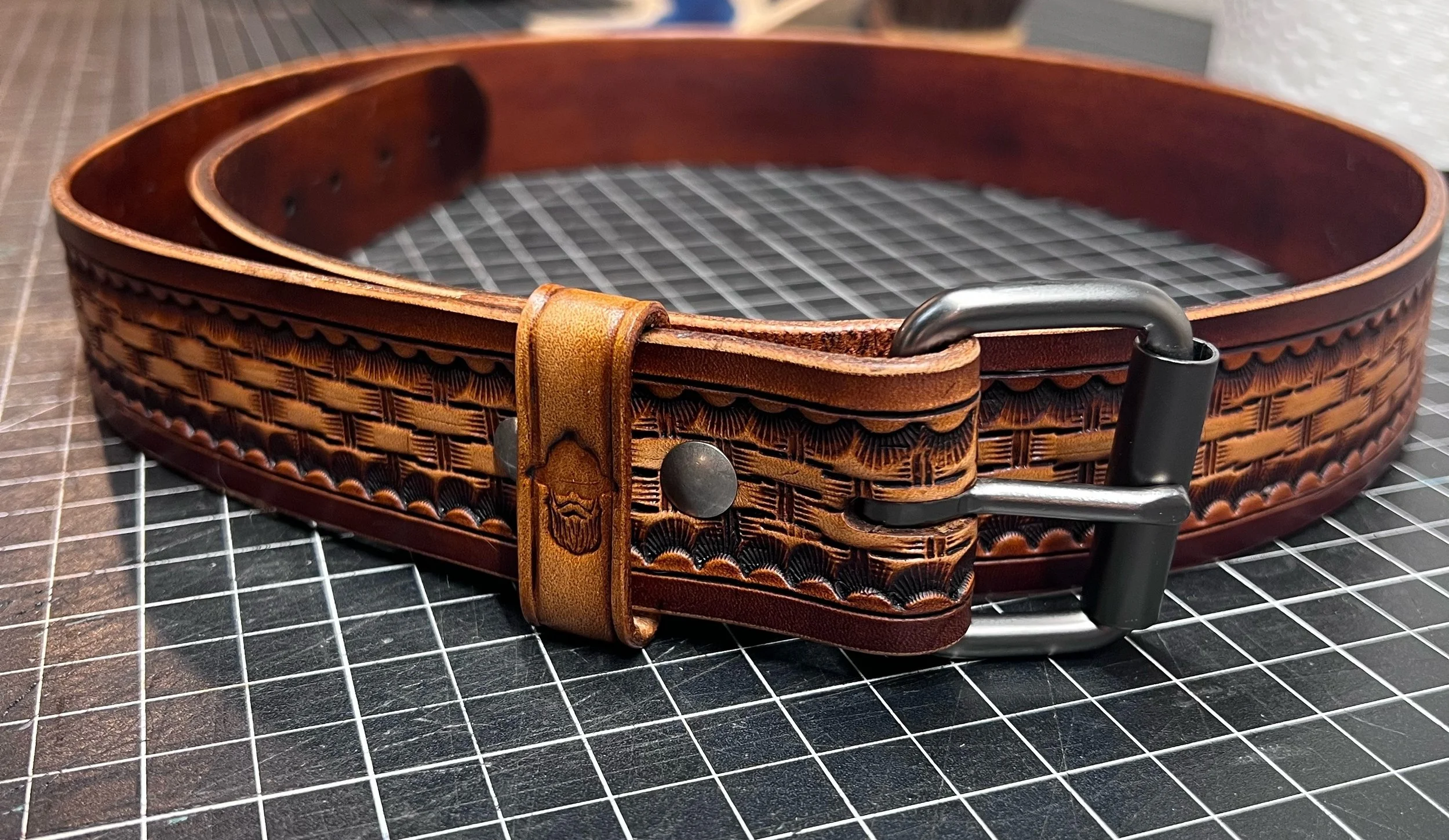
Vegetable Tanned Heritage Leather
This is where I work.
Tanned slowly with tannins from oak, chestnut, mimosa, and other plants. It starts out firm, then softens and takes the shape of whatever it wraps around, the way a wallet molds to your cards or a saddle molds to horse and rider. With sun and handling it darkens from pale tan to deep brown, and the patina keeps developing for decades.
The top levels overlap. Full grain is about which part of the hide you get, and vegetable tanning
DELAWARE, OHIO
Where I Work
Around 80 to 90 percent of leather made today is chrome tanned, which takes about a day. Vegetable tanning takes weeks. At Hermann Oak, the hides soak in bark tanning pits for four to six weeks before they're ever dried and finished.
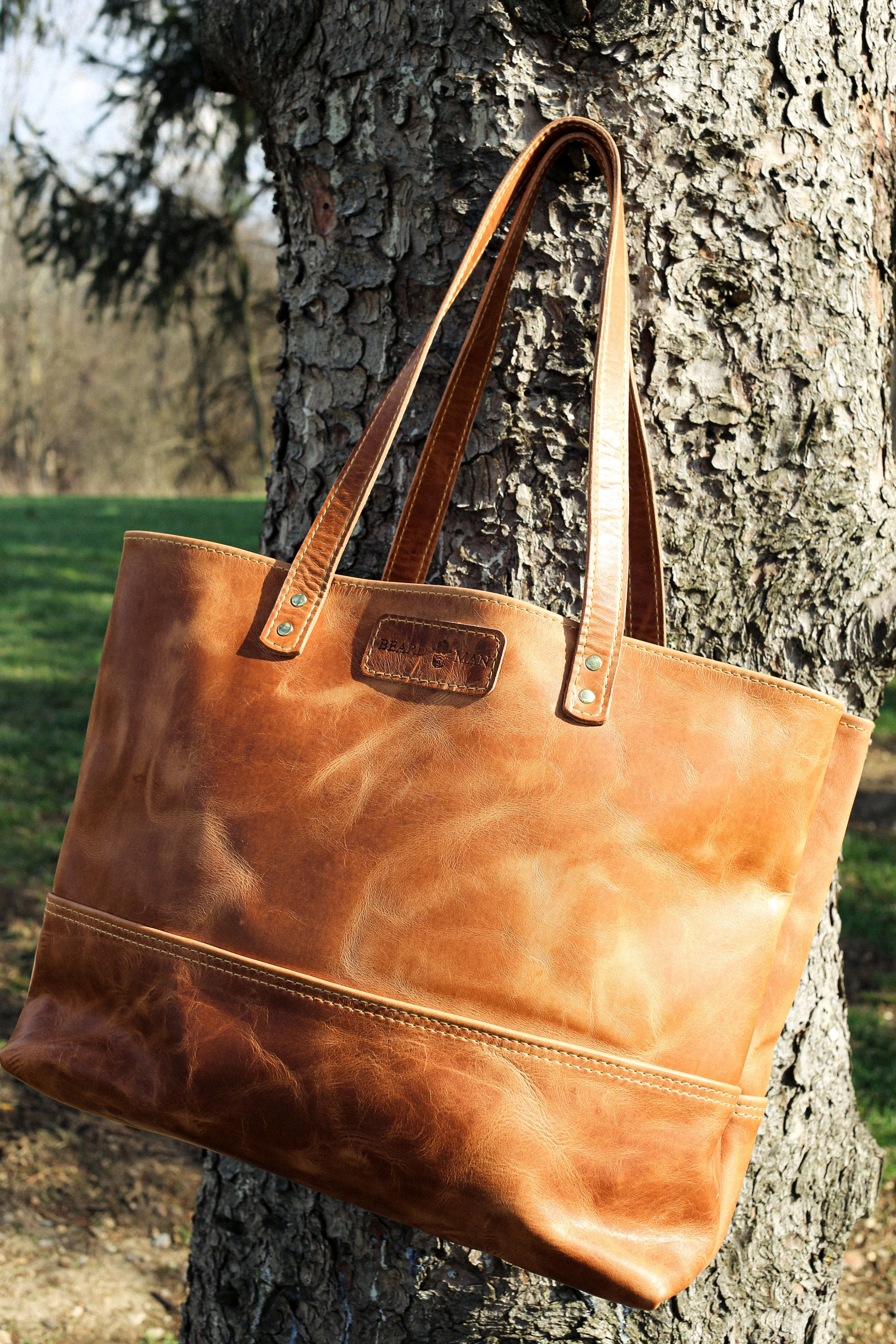
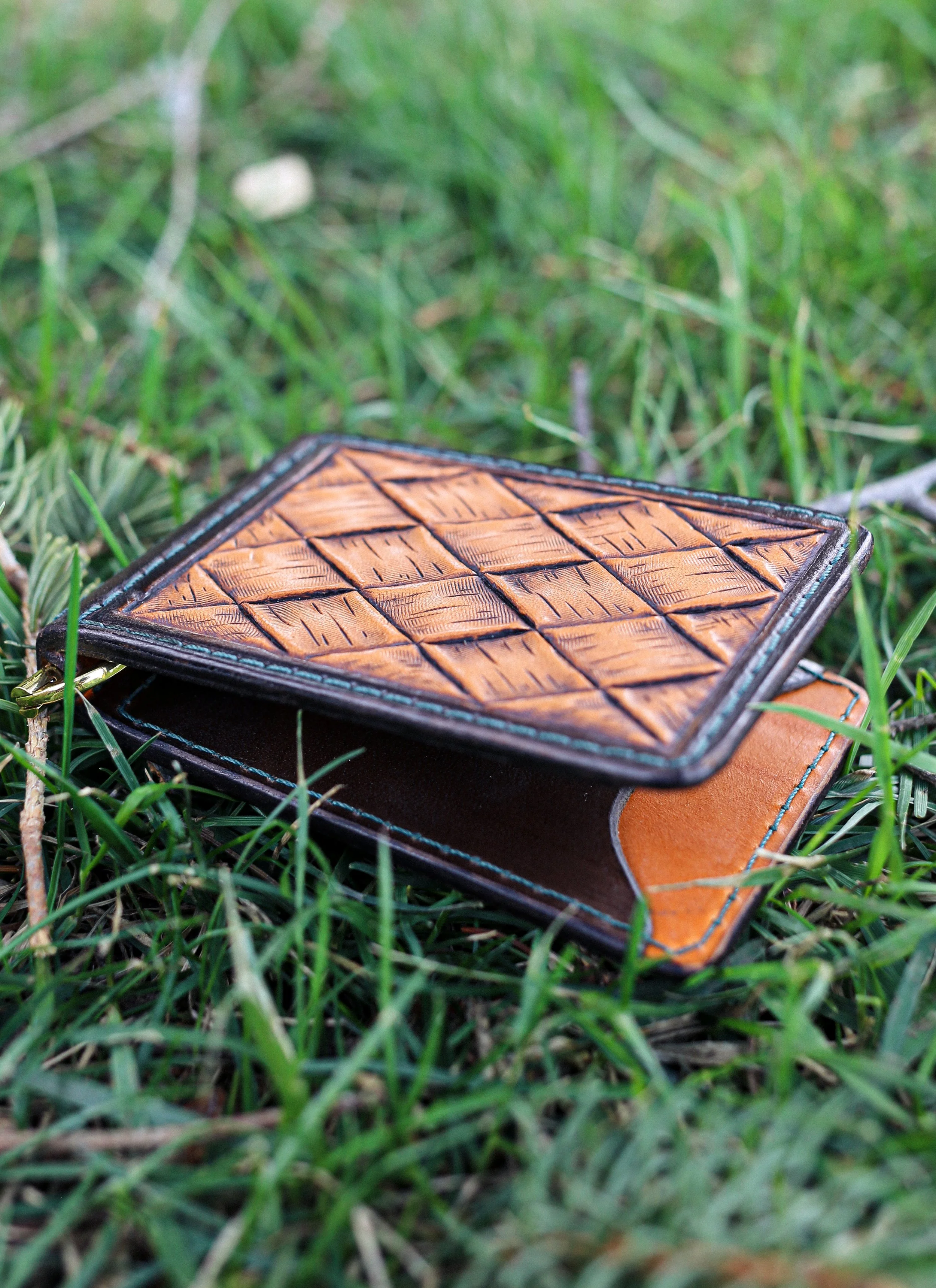
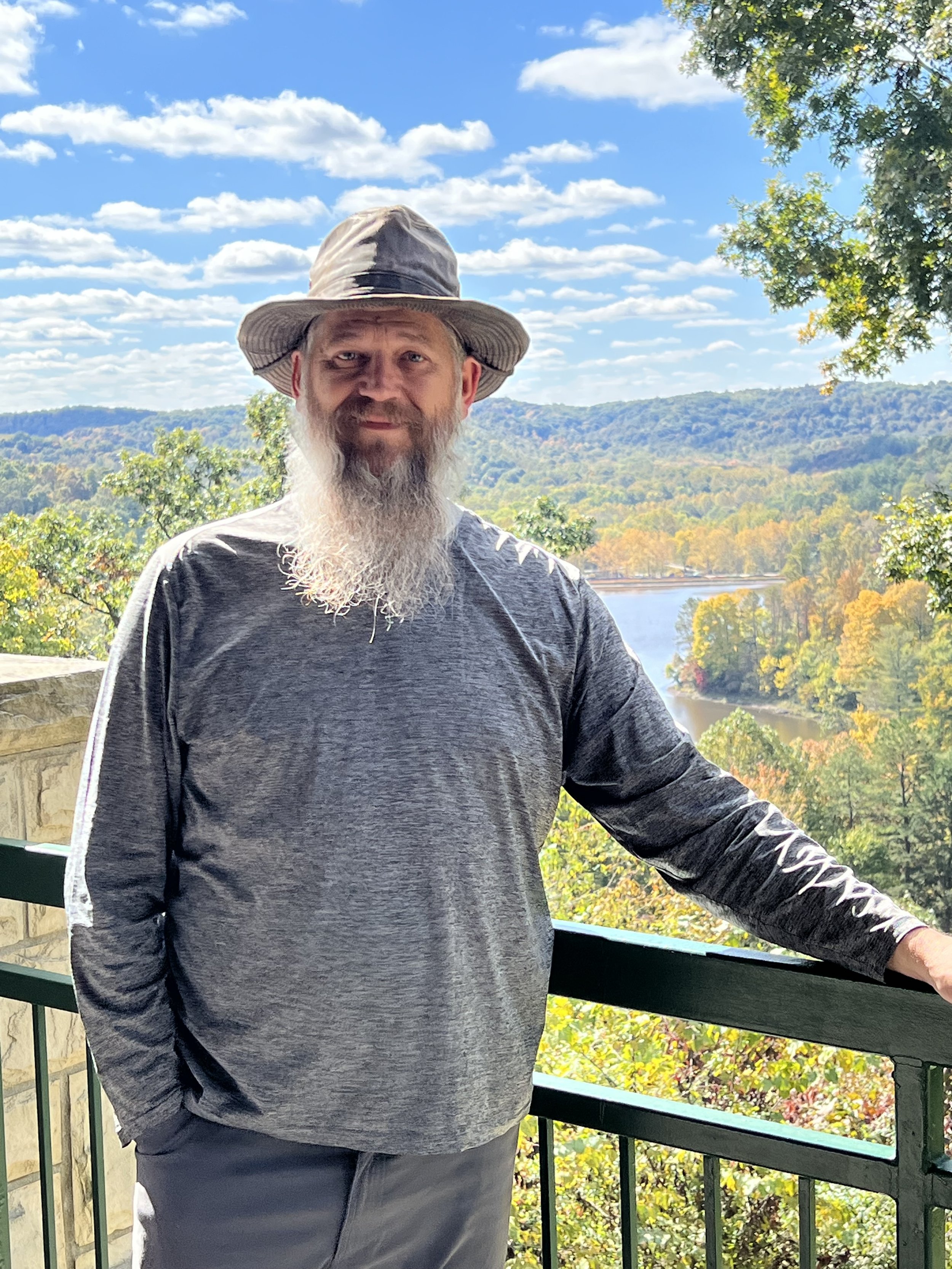
I cut and finish every piece at my bench in Delaware, Ohio. Wallets are hand stitched. Totes get a mix of hand and machine stitching.
Belts and Wallets: Hermann Oak
Vegetable tanned in St. Louis, Missouri, by a family tannery working since 1881.
Totes: Horween Derby
Vegetable tanned in Chicago with the same extracts as Horween's Shell Cordovan, then waxed and tumbled. 3 to 4 oz, in a range of colors.
Good leather ages well. That's the whole idea.
CUSTOM WORK
Have Something in Mind?
Every piece is made to order. If you'd like a custom piece, send me a message. DM @BeardManLeather on Instagram or email chris@beardmanleather.com